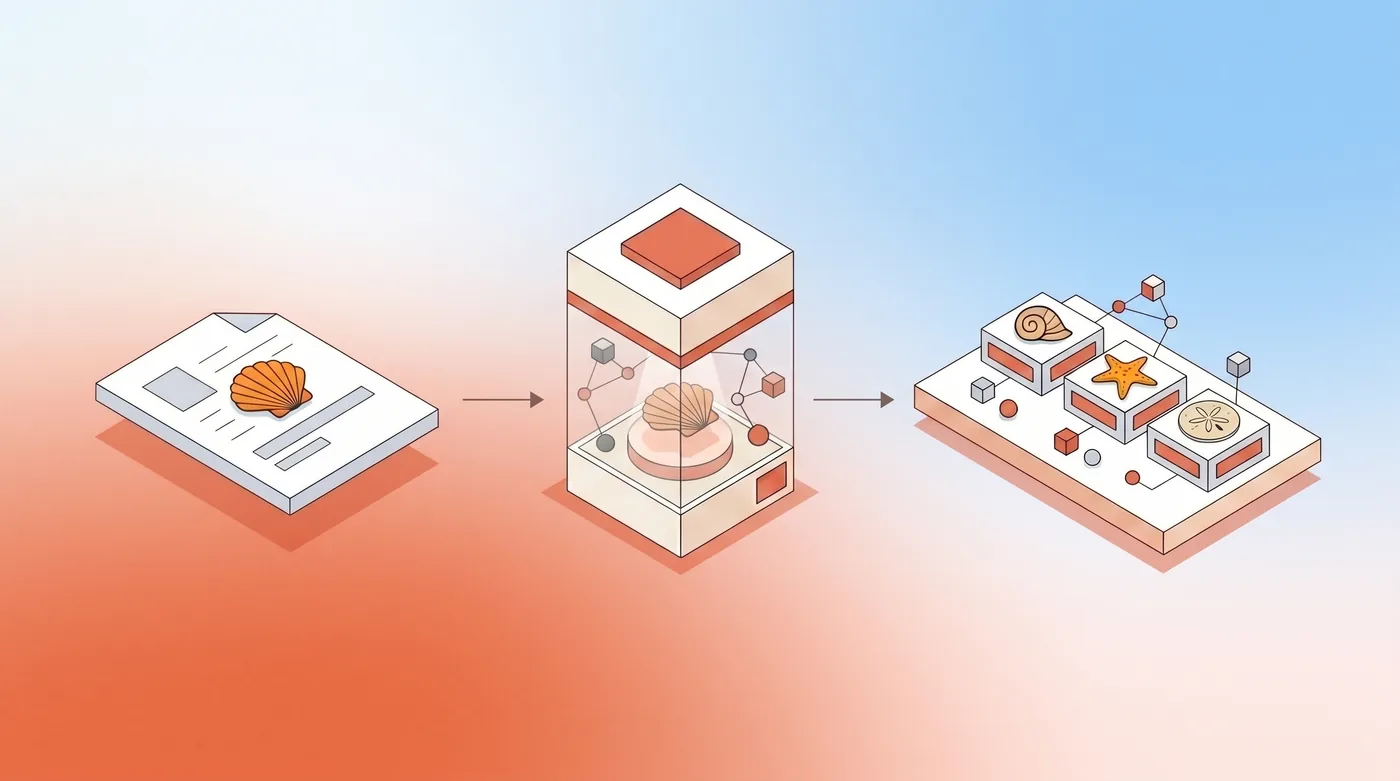
OpenAPI-to-tool conversion
Generate MCP tools from the OpenAPI contract you already maintain.
0mcp converts approved operations from your OpenAPI specification into MCP tools and serves them through a managed endpoint. Your existing API keeps its business logic, permissions, validation, and data; 0mcp operates the agent-facing protocol layer.
01 / Source
Your REST API
GET /customers
POST /orders
PATCH /projects/:id
02 / Contract
OpenAPI Specification
Schemas understood
Operations selected
Auth preserved
03 / Hosted endpoint
0mcp Hosted MCP Server


Generate MCP tools from the OpenAPI contract you already maintain.

Publish a deliberate subset of API operations so the agent-facing surface is smaller and easier to review.

Forward configured credentials to the upstream API while your backend remains responsible for authorization and permissions.

Review and publish MCP changes deliberately as API operations and agent-facing descriptions evolve.
Track tool calls, latency, response status, and errors without storing proxied request or response bodies by default.
Connect compatible AI applications and custom agents to one hosted server surface instead of operating it yourself.
Build vs host
Own every infrastructure detail, or start from your OpenAPI contract with a managed platform.
01
02
03
An MCP server is a program that exposes tools, resources, or prompts to AI applications through the Model Context Protocol. In this workflow, 0mcp presents selected REST API operations as MCP tools while the original API continues to execute the underlying business logic.
A hosted MCP server is a remotely available Model Context Protocol endpoint whose deployment and protocol infrastructure are operated for you. With 0mcp, the hosted layer exposes approved API operations as tools and forwards valid calls to your existing backend.
0mcp reads operations, parameters, request schemas, descriptions, and authentication requirements from an OpenAPI specification. You choose which operations to publish and review their agent-facing names and descriptions before 0mcp serves them as tools from a hosted MCP endpoint.
No. Your REST API remains in place and continues to own data, business logic, validation, authorization, permissions, and rate limits. 0mcp adds an MCP-compatible layer in front of the operations you approve; it does not replace the backend.
Yes. You select the API operations that become MCP tools before publishing. This allowlist keeps internal or unsuitable endpoints out of the agent-facing surface and gives reviewers a smaller, intentional capability set to assess.
0mcp forwards requests according to your configured authentication behavior. The upstream API remains responsible for checking credentials, user permissions, authorization rules, and rate limits. Teams should expose only appropriate operations and test both successful and denied calls before publishing.
Proxied request and response bodies are not stored by default. 0mcp can retain operational metadata—such as the tool called, response status, latency, and error signals—for monitoring. Review the privacy policy and your configuration for the current data-handling terms.
Use 0mcp when you already have an OpenAPI-described API and want a managed path for operation selection, testing, hosting, revisions, and analytics. Build in-house when MCP infrastructure is a core competency or you need protocol behavior that a managed platform does not support.
Import your spec, approve the operations AI clients can call, test the behavior, and publish an MCP endpoint without rebuilding your backend.