n8n Node vs MCP Server: Which Should Your SaaS Build First?
Should your SaaS build an n8n node or an MCP server first? A buyer's comparison of reach, control, distribution, and maintenance, plus when to build both.

Kelis Shekhaliya
TL;DR
Build an n8n node first if your customers run fixed, repeatable automations in n8n. Build an MCP server first if you want AI agents in many clients, including n8n's AI Agent node, to call your product. Both sit on the same API, so many SaaS teams end up shipping both and reuse one action list.
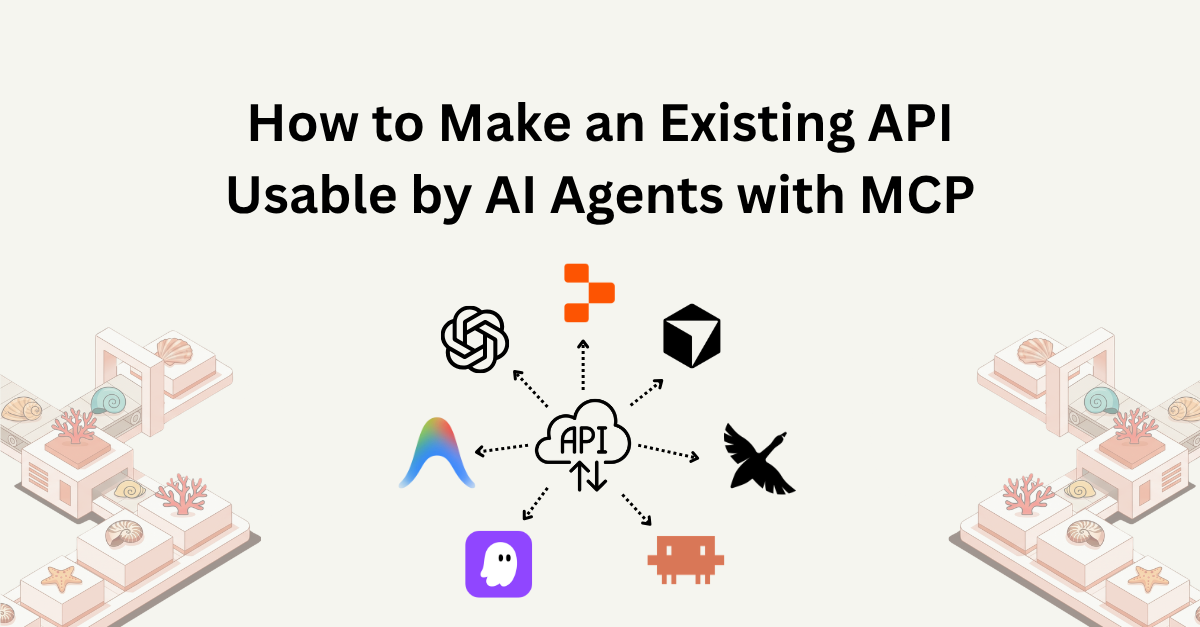
Short answer: if your customers mostly build fixed, repeatable automations in n8n, an n8n node is the better first build. If you want AI agents in many clients (Claude, ChatGPT, Cursor, n8n's AI Agent node and others) to discover and call your product's actions, build an MCP server. They are not either-or: both sit on top of the same API, and an MCP server is usable inside n8n agent workflows too, while an n8n node only helps people who use n8n.
This guide is for SaaS founders, CTOs, and API teams deciding which integration surface to ship first. It compares the two on who they reach, how much control they give, what they cost to build and maintain, and when it makes sense to have both.
What each one actually is
An n8n node
An n8n node is a product-specific step inside n8n's workflow editor. A community node is an npm package (names start with n8n-nodes-) that defines resources, operations, fields, and credentials, so a workflow builder can pick "Customer → Create" from a menu instead of configuring a raw HTTP Request node. According to n8n's documentation, unverified community nodes install from npm on self-hosted instances only; to appear for n8n Cloud users, a node has to go through verification in the n8n Creator Portal, and since 1 May 2026 verified nodes must be published from GitHub Actions with a provenance statement.
An MCP server
An MCP server exposes your product's capabilities as tools, with names, descriptions, and input schemas, over the Model Context Protocol. Any MCP-compatible client can connect to it with one URL and credentials, and the AI model picks which tool to call and fills in the arguments. If MCP vs a plain API is still fuzzy for your team, start with MCP vs API: what is the difference.
n8n node vs MCP server at a glance
| n8n node | MCP server | |
|---|---|---|
| Who uses it | People building workflows in n8n | AI agents in any MCP client, including n8n's AI Agent node |
| Who decides what runs | The workflow author picks the operation and can pin parameters | The model picks the tool and arguments from the tools you allow |
| Best for | Deterministic, scheduled, or trigger-based automations | Open-ended requests where the right action isn't known in advance |
| Distribution | npm package, plus verification to reach n8n Cloud | A hosted endpoint, optionally listed in MCP registries |
| What you maintain | Node code, package releases, n8n compatibility | Tool definitions, auth, hosting, monitoring, protocol changes |
| Reach beyond one platform | No, n8n only | Yes, every compatible client |
n8n's own documentation frames the trade-off the same way from the user's side: a built-in node gives tighter control because you fix the operation and pin parameters, while an MCP server gives the agent more room "at the cost of control and more context per call."
When an n8n node is the better first build
- Your customers already live in n8n. If support tickets and community posts keep asking for an n8n integration, a node meets them where they are.
- The jobs are repeatable. Syncing records, sending a notification on a trigger, or creating an invoice on a schedule doesn't need a model to choose anything. A node is cheaper to run and easier to debug.
- You need triggers. Workflow automations usually start from an event. A node can ship trigger behavior alongside actions, which fits how n8n users build.
- Your action set is small and stable. A focused node with a few well-labeled operations is quick to review and rarely changes.
When an MCP server is the better first build
- Buyers are asking "can I use you from Claude or ChatGPT?" An n8n node doesn't answer that question; an MCP server does, and it also works inside n8n through the MCP Client Tool node.
- The requests are open-ended. "Find the overdue accounts and draft a follow-up for each" needs a model to chain several actions. That's what MCP tools are for.
- You want one integration surface, not ten. One MCP endpoint reaches many clients, instead of a separate plugin or node per platform.
- Your API changes often. If the MCP server is generated from your API definition, adding an endpoint can become a config change rather than a new package release.
Should you build both?
For many SaaS products, yes, eventually. They serve different moments: a node for the automations a customer sets up once and runs forever, and an MCP server for the ad hoc work people now hand to AI assistants. Because both call the same API, the decisions you make for one carry over to the other: which actions matter, how to name them, and what each one needs as input. The work of choosing which endpoints to expose as tools is the same work as choosing a node's operations.
A practical order for most teams:
- Clean up the API definition. Clear operation IDs, summaries, and parameter descriptions help both surfaces.
- Ship the surface your buyers ask for most. Count the requests: n8n-specific asks point to a node; "AI agent," "Claude," or "MCP" asks point to an MCP server.
- Reuse the same action list for the second surface. Don't design the two from scratch separately.
We went through this ourselves. The 0mcp team built NativeShip for the n8n node path after working on the MCP path; the NativeShip case study covers what goes into shaping a good node from an API.
What each path costs to maintain
Maintaining an n8n node
You own a package: code, tests, versioned releases to npm, the publishing workflow n8n requires for verification, and keeping up with changes in n8n itself. Every new API capability you want in the node means a code change and a release.
Maintaining an MCP server
If you build it in-house, you own more moving parts: tool generation, authentication, hosting, scaling, logs and monitoring, versioning, and keeping pace with MCP specification updates. A hosted platform takes most of that off your team. This is where 0mcp fits: it imports your OpenAPI, Swagger, or Postman definition, lets you choose which operations become tools and test them, and runs the result as a hosted MCP server, with your authentication and business logic staying in your own backend. See how to convert your API to an MCP server for the full workflow.
A quick decision checklist
- Most integration requests mention n8n by name → start with an n8n node.
- Most requests mention AI assistants, agents, or MCP → start with an MCP server.
- Your key use cases are event-triggered and fixed → node.
- Your key use cases are conversational or multi-step and vary per user → MCP server.
- You can't spare engineers for ongoing integration maintenance → prefer the surface you can generate and host from your existing API definition.
Try 0mcp for the MCP side
If the MCP server is the piece you need, you don't have to write protocol code or run the infrastructure. Import your API definition into 0mcp, pick the tools, test them with live requests, and connect AI clients to one hosted endpoint. Start with your existing API and see what your tools look like before you commit engineering time.
FAQ
01Is n8n an alternative to MCP?+-
Not exactly. n8n is a workflow automation platform; MCP is a protocol that lets AI clients discover and call tools. n8n can use MCP servers as agent tools, and an n8n node and an MCP server can both sit on top of the same API.
02Can n8n use my MCP server if I don't build an n8n node?+-
Yes, inside AI agent workflows. n8n's MCP Client Tool node connects an AI Agent node to any MCP server with its URL and credentials. It does not replace a node for fixed, non-agent workflow steps.
03Do I need n8n verification for my community node?+-
Only if you want n8n Cloud users to install it. Per n8n's docs, unverified community nodes install from npm on self-hosted n8n only. Verification goes through the n8n Creator Portal and, since 1 May 2026, requires publishing via GitHub Actions with a provenance statement.
04Which is cheaper to maintain, an n8n node or an MCP server?+-
A small, stable n8n node is usually lighter than a self-built MCP server, which needs auth, hosting, monitoring, and protocol updates. A hosted MCP platform removes most of that infrastructure work, so the comparison depends on whether you build the MCP server yourself.
05Should a SaaS company build both an n8n node and an MCP server?+-
Often, yes, over time. Ship the one your buyers ask for most, then reuse the same action list, names, and input definitions for the second, since both call the same API.